
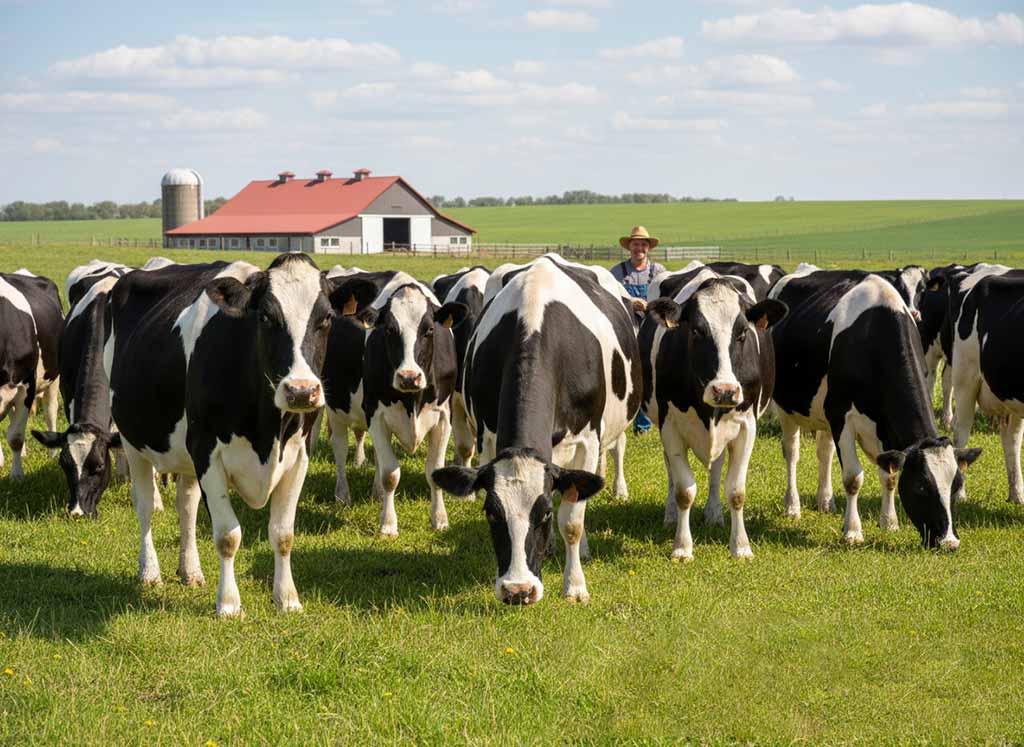
Do you know that there are multiple types of dairy cows producing the products we love? Here’s a look at why farms love Holstein-Friesian cows.
You likely recognize the distinct black-and-white pattern of a Holstein-Friesian cow immediately. These animals serve as the poster children for the entire dairy industry. While their look is iconic, farmers choose them for practical, economic, and environmental reasons. These cows support efficient food systems that aim to maximize output while managing resources. Let’s explore why dairy farms love having Holstein-Friesian cows and how they bring us the products we know and love.
Unmatched Milk Production
Holsteins are the undisputed champions of volume. No other breed matches their ability to produce massive quantities of milk. An average Holstein can yield over 23,000 pounds of milk in a single year.
For an eco-conscious observer, this high yield matters. It essentially means farmers can produce more food with fewer animals. A smaller herd footprint reduces the amount of land, water, and energy required to generate a gallon of milk. High-producing animals allow dairies to meet consumer demand without expanding their physical footprint into wild habitats.
Superior Feed Efficiency
Efficiency drives sustainable farming. Farmers need animals that turn crops into nutrition effectively. When industry experts discuss the best cow breeds for dairy production, Holsteins stand out for their feed conversion ratios. They possess a large appetite, but their bodies uses that fuel with incredible purpose.
Instead of burning off excess energy or storing it all as body fat, Holsteins direct the majority of their caloric intake toward lactation. This biological efficiency ensures that the grain and forage grown to feed the herd translates directly into food for people. It minimizes waste in the production cycle.
Unmatched Milk Production
Farming requires predictability. A dairy environment involves daily routines, machinery, and close interaction with humans. Holsteins bring a generally docile and easygoing temperament to the barn. This calm nature creates a safer workplace for farm employees and reduces stress for the herd.
Their adaptability also shines in various environments.
Climate Resilience: They thrive in cooler climates and warmer regions with proper ventilation.
Housing Flexibility: They adjust well to open pastures or free-stall barns.
Social Structure: They herd well together without excessive aggression.
The “Black Gold” for Soil Health
For people who love gardening, the backend of a dairy operation offers a significant benefit: manure. Holsteins are large animals, often weighing around 1,500 pounds. They produce a significant amount of organic waste, which serves as a vital resource for regenerative agriculture.
Dairy farmers capture this manure and compost it. They then apply it to their fields as a natural fertilizer. This returns nitrogen, phosphorus, and potassium to the earth, helping grow the next season’s feed crops. This cycle reduces reliance on synthetic chemical fertilizers. For the home gardener, composted cow manure remains a top-tier soil amendment for boosting vegetable growth and soil structure.
Economic Stability for Local Farms
Sustainability also includes economic viability. Local farms need to stay in business to provide fresh food to their communities. Holsteins offer financial stability because of their dual utility.
While primarily dairy cows, they also have a larger frame than breeds like Jerseys. This means they carry value for beef production once their milking days end. This added value helps farmers balance their books and keep their operations running smoothly through market fluctuations. It’s no wonder dairy farms love Holstein-Friesian cows so much.